Seasonal Guide · Storm Season
Hurricane Preparedness Checklist for Florida Homes.
A practical, room-by-room checklist built for Southeast Florida homeowners — covering the things generic checklists miss: dock lifts, generators, impact glass, art and wine, and the small mechanical details that turn a close call into a catastrophe.
Florida hurricane season runs June 1 through November 30, with peak activity from mid-August through October. Start your prep by May.
2–3 weeks before storm season
Structural & Openings
- Inspect all impact windows and doors for seal degradation, cracked glass, or failed gaskets — replace before June 1.
- Test every accordion, bahama, and roll-down shutter. Lubricate tracks and tracks; replace any missing wing nuts or bolts.
- Verify hurricane straps and roof-to-wall connections are intact — schedule a roofer inspection if your roof is over 10 years old.
- Check garage door wind rating. Most pre-2002 garage doors are not wind-rated; reinforce or replace with a code-rated door.
- Seal roof penetrations (vents, skylights, pipe boots) — these are the #1 source of water intrusion during storms.
- Inspect and clean gutters, downspouts, and scuppers so water can move freely during heavy rainfall.
2 weeks before season
Mechanical Systems & Power
- Schedule a generator service: oil change, filter, battery check, and a full load test. Top off propane or diesel fuel.
- Test your transfer switch — confirm the generator kicks in within 30 seconds of a simulated outage.
- Service AC units and dehumidifiers: clean coils, replace filters, clear condensate lines, and check refrigerant levels.
- If you have a whole-house surge protector, test it. If you don't, install one — it protects against post-storm power spikes.
- Elevate or raise any mechanical equipment that sits at ground level in flood-prone areas.
- Photograph every system's make, model, and serial number for insurance — or pull it from your home inventory.
1 week before season
Exterior, Dock & Vessel
- Secure or remove all loose exterior items: patio furniture, umbrellas, planters, decorations, and trash bins.
- Trim trees and remove dead branches — especially ficus, sea grape, and palms near the house or power lines.
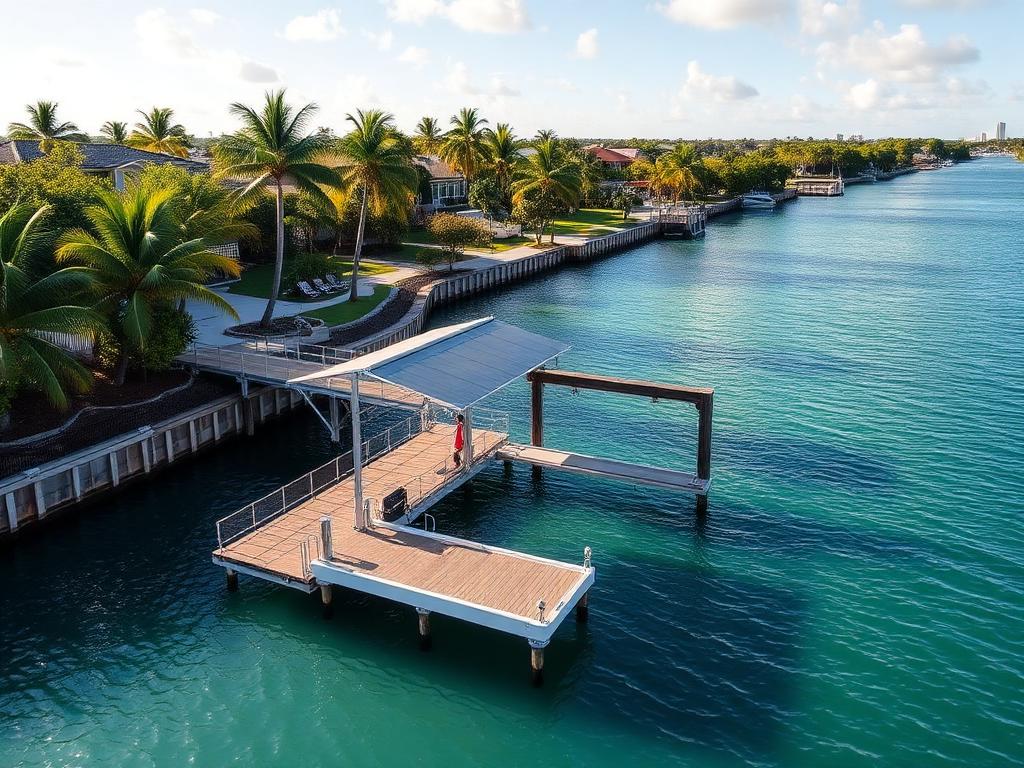
- Inspect and secure dock cleats, pilings, and boat lift cables. Replace corroded hardware.
- If you keep a vessel on a lift: raise it fully, secure the cover, disconnect shore power, and check lift capacity.
- If your vessel stays in the water: double all lines, add chafe guards, and set fenders. Consider a hurricane haul-out plan.
- Secure pool equipment: lower water level 6–8 inches, super-chlorinate, turn off pump motor (or switch to generator), and store loose pool items.
- Check seawall cap and bulkhead for cracks or erosion — storm surge will find any weakness.
Before a named storm approaches
Water, Mold & Interior
- Move valuables, art, and electronics away from windows and off floor level in flood zones.
- Photograph every room and its contents — timestamped photos are your best insurance evidence.
- Place towels and sandbags at entry doors and garage threshold if you're in a surge zone.
- Set AC to 78°F and dehumidifier to 50% relative humidity if you're leaving before the storm.
- Shut off the main water supply if you evacuate — a burst pipe during a storm is a secondary disaster.
- Clear the refrigerator of perishables if you're evacuating — power outages turn food into a mess.
- Run the dishwasher and washing machine empty before leaving so standing water doesn't sit in the lines.
Before June 1
Documents & Insurance
- Review your windstorm and flood policies — they are separate in Florida. Confirm coverage limits and deductibles.
- Check that your policy includes loss-of-use and additional living expenses if you're displaced.
- Store digital copies of insurance policies, home inventory, and ID documents in cloud storage (not just on a local drive).
- Update your home inventory: photos, video walkthrough, make/model/serial numbers, and approximate values.
- Keep a printed copy of policy numbers, agent contact, and claim phone numbers in your go-bag.
- Confirm your wind mitigation report is current — it can reduce your premium and speed up claims.
When a storm is named
Evacuation & Go-Bag
- Know your evacuation zone (Palm Beach and Broward coastal areas are typically Zone A or B).
- Pack a go-bag: 3 days of water (1 gallon/person/day), non-perishable food, medications, flashlight, batteries, first-aid kit, and phone chargers.
- Fill your vehicle's gas tank before the rush — stations run dry 48 hours before landfall.
- Keep cash on hand; ATMs and card readers go down with the power grid.
- Charge all phones, laptops, and power banks to 100%.
- Identify your nearest shelter and your route — confirm it with anyone who might be with you.
- Notify your home watch or management service that you're evacuating and where you'll be reachable.
After the storm
Post-storm safety checklist.
The hours after a storm are when most injuries and secondary damage happen. Work through this list before you settle back in.
- Do not return until officials declare your area safe — downed power lines and standing water are lethal.
- Photograph all damage before cleaning up or making temporary repairs — your insurance claim depends on it.
- Make only emergency repairs to prevent further damage (tarps, board-ups). Keep all receipts.
- Check for gas leaks before entering — if you smell gas, leave immediately and call the utility company.
- Inspect the roof from the ground with binoculars; do not climb up after a storm.
- Run generators outdoors only, at least 20 feet from the house — never in a garage or screened patio.
- Discard any food that has been above 40°F for more than 2 hours.
- Check dock pilings, lift cables, and seawall for storm damage before using them.
- Have your AC and electrical systems inspected before restoring full power if your home flooded.
- Contact your insurance agent within 48 hours to begin the claim process.
Key contacts for Southeast Florida
Save these before you need them.
During an active storm, cell service may be limited. Program these into your phone now and keep a printed copy in your go-bag.
- Palm Beach County Emergency Management561-712-6400
- Broward County Emergency Management954-831-4000
- Florida Division of Emergency Management850-815-4000
- FPL Power Outage Reporting1-800-468-8243
- Florida Gas Emergency1-877-432-4325
- FEMA Disaster Assistance1-800-621-3362
- Red Cross Southeast Florida1-800-733-2767
Don't want to manage this alone?
Storm prep is included in every Mangrove membership.
We pre-book shutter service, generator maintenance, and dock inspections long before the first advisory — and walk your property after every storm. Private memberships from $400/month.